
Plane and helicopter crash cases for injured survivors and families of those killed, in Florida, across the United States, and abroad.
$2,912,888 jury verdict, Cessna 402B charter crash, 2024
Of Counsel Robert L. Parks: more than 200 general aviation crash cases
More than a dozen aviation verdicts and settlements over $1 million
Free consultation. No fee unless we recover.



QUICK ANSWER
If you were hurt, or lost a family member, in a plane or helicopter crash, you may have claims against the aircraft operator, the maker of the aircraft or a defective part, or a maintenance company.
Florida's deadline is 2 years for negligence and wrongful death, and international flights can be governed by treaty rules. In 2024, Garay Law won a $2,912,888 jury verdict for a passenger injured in a Cessna 402B charter crash.
Key Facts
Who can file
Injured passengers; the personal representative for a family after a death (Fla. Stat. § 768.20)
Possible defendants
Operators, charter companies, aircraft and parts manufacturers, maintenance companies
Typical deadline
2 years for negligence and wrongful death; 4 years for product injury claims
Who investigates
National Transportation Safety Board (49 U.S.C. § 1131)
NTSB report in court
Cannot be used in a civil damages lawsuit (49 U.S.C. § 1154(b))
Cost to start
Free consultation; no fee unless we recover
What should I do after a plane or helicopter crash?
Get medical care, keep every travel and booking record, avoid statements to insurers, and contact an aviation lawyer early, before evidence is released or lost.
1
Take care of yourself and your family first. Get medical attention, even for injuries that seem minor, and keep the records. Injuries from crashes and hard landings are not always obvious at first.
2
Keep every document. Save tickets, boarding passes, charter agreements, invoices, emails, text messages, and photos or video taken before, during, or after the flight.
3
Keep personal property from the flight. Clothing, bags, and phones can be evidence.
4
Do not give recorded statements to an operator's or manufacturer's insurer before you get advice.
5
Contact an aviation lawyer early. The NTSB investigates to determine probable cause (49 U.S.C. § 1131), but its work is for safety, not for your claim, and federal law bars its reports from being used in a civil damages lawsuit (49 U.S.C. § 1154(b)). An independent investigation, started early, protects your case while the wreckage, maintenance records, and data are still available.
Liability depends on the cause, and several parties can share responsibility, including the operator, the pilot, the maintenance provider, and the manufacturers of the aircraft and its parts.
Aviation crashes rarely have a single cause. Depending on the facts, responsibility may rest with:
The operator or charter company that flew the aircraft and its pilots.
The maintenance or repair company that worked on the aircraft.
The manufacturer of the aircraft, its engine, or a component, under product liability law.
The owner, fixed-base operator, or other companies involved in the flight.
A failed part does not by itself prove a manufacturing defect, and a pilot at the controls does not by itself prove pilot error. The NTSB's probable cause finding is not a finding of legal fault, and the board's report cannot be admitted into evidence or used in a civil action for damages (49 U.S.C. § 1154(b)). Your claim has to be proven with independent evidence: wreckage examination, maintenance logs, flight data, weather records, and expert analysis.
Florida's comparative fault law applies to negligence and product liability claims and divides responsibility among the parties at fault (Fla. Stat. § 768.81). Claims involving air traffic control or other federal activity follow separate federal procedures.
How long do I have to file an aviation accident claim?
Florida generally allows 2 years for negligence and wrongful death claims and 4 years for product claims, but federal law and treaties can set different or outer limits.
The deadline depends on the type of claim, the type of aircraft, and where the flight was going.
Under Florida law, negligence claims and wrongful death claims must be filed within 2 years (Fla. Stat. § 95.11(5)(a), (e)). A claim for injury founded on the design or manufacture of a product has 4 years (Fla. Stat. § 95.11(3)(d)), running from when the facts giving rise to the claim were discovered or should have been discovered (Fla. Stat. § 95.031(2)(b)).
Outer limits also apply. For general aviation aircraft, the federal General Aviation Revitalization Act bars most claims against manufacturers if the accident occurred more than 18 years after the aircraft or the replaced part was delivered, subject to exceptions (Pub. L. 103-298, §§ 2, 3(3)). Florida's product repose statute sets a 20-year limit for aircraft used in commercial or contract carrying of passengers or freight (Fla. Stat. § 95.031(2)(b)3.).
On international flights, the Montreal Convention sets a 2-year period running from the date of arrival at the destination, the date the aircraft ought to have arrived, or the date the carriage stopped (Montreal Convention art. 35(1)). Because several deadlines may apply at once, call us as early as possible.
What compensation can families and survivors recover?
Survivors may recover medical expenses, lost income, and pain and suffering, and families may recover the losses Florida's Wrongful Death Act allows, including lost support and mental pain and suffering.
For people injured in a crash, compensation can include medical treatment, future care, lost income and earning capacity, and pain and suffering.
When a crash causes a death, Florida's Wrongful Death Act sets out the damages. Each survivor may recover lost support and services. A surviving spouse may recover for loss of companionship and protection and for mental pain and suffering. Minor children, and all children if there is no surviving spouse, may recover for lost parental companionship, instruction, and guidance and for mental pain and suffering.
The estate may recover lost earnings and, in some cases, lost prospective net accumulations, along with medical and funeral expenses (Fla. Stat. § 768.21).
A wrongful death action is brought by the decedent's personal representative for the benefit of the survivors and the estate (Fla. Stat. § 768.20). For deaths on the high seas beyond 3 nautical miles from the U.S. shore, federal law provides a separate admiralty action for the decedent's spouse, parent, child, or dependent relative (46 U.S.C. § 30302).
Does an international flight change my case?
Yes. Claims against an airline for international travel are usually governed by the Montreal Convention, which sets its own rules, including a 2-year deadline that is strictly applied.
Many international flights are governed by the Montreal Convention, a treaty the United States has joined. When the treaty applies, it controls claims against the airline for passenger injury and death, and the right to damages is lost if suit is not brought within 2 years from the date of arrival at the destination, the date the aircraft ought to have arrived, or the date the carriage stopped (Montreal Convention art. 35(1)).
The method of calculating that period is set by the law of the court hearing the case (art. 35(2)).
Whether the treaty applies depends on the passenger's itinerary, not just the leg where the accident happened. Claims against other parties, such as manufacturers and maintenance companies, may proceed under different law.
When a crash happens outside the United States, Florida law also looks at the deadline where the claim arose. If the law of that country bars the action for lapse of time, a Florida court will not hear it (Fla. Stat. § 95.10). We review the ticket, itinerary, and every potential defendant at the start so the right deadlines are met.
Our aviation record
Crashes our attorneys have worked on, in Florida, across the U.S., and abroad.
Prior results do not guarantee a similar outcome.
2022
Cessna 402B
Chub Cay, Berry Islands, Bahamas
2021
Cessna 207
Marathon, Florida
2019
Piper PA28
Boca Raton, Florida
2016
Jihlavan KP5 ASA (Skyleader 500)
Rhoadesville, Virginia
2015
Lockheed Martin F-16
Albacete, Spain
2015
Boeing 767 incident
Fort Lauderdale, Florida
2014
Cessna crash
Hinton, Virginia
2013
Piper crash
Fort Lauderdale, Florida
2013
Learjet crash
Fort Lauderdale, Florida
2012
Bell Helicopter crash
Auyán-tepui, Venezuela
2012
Cessna crash
Stock Island, Key West, Florida
2010
Robinson Helicopter crash
Blairsville, Georgia
2010
Smith Aerostar 601P crash
Sugar Grove, Illinois
2009
Boeing MD-11
Shanghai, China
What happens after you call
1
Free review
An attorney listens and tells you plainly whether we can help.
2
Investigation
We preserve evidence and bring in independent experts early.
3
Building the case
We identify every responsible party and document your full losses.
4
Resolution or trial
We prepare every case for trial, which drives fair settlements.

Written and reviewed by
Gabriel A. Garay
Trial lawyer. J.D., Florida International University College of Law. Past President, Coral Gables Bar Association; Board of Directors, Miami-Dade Trial Lawyers Association.
View full bio
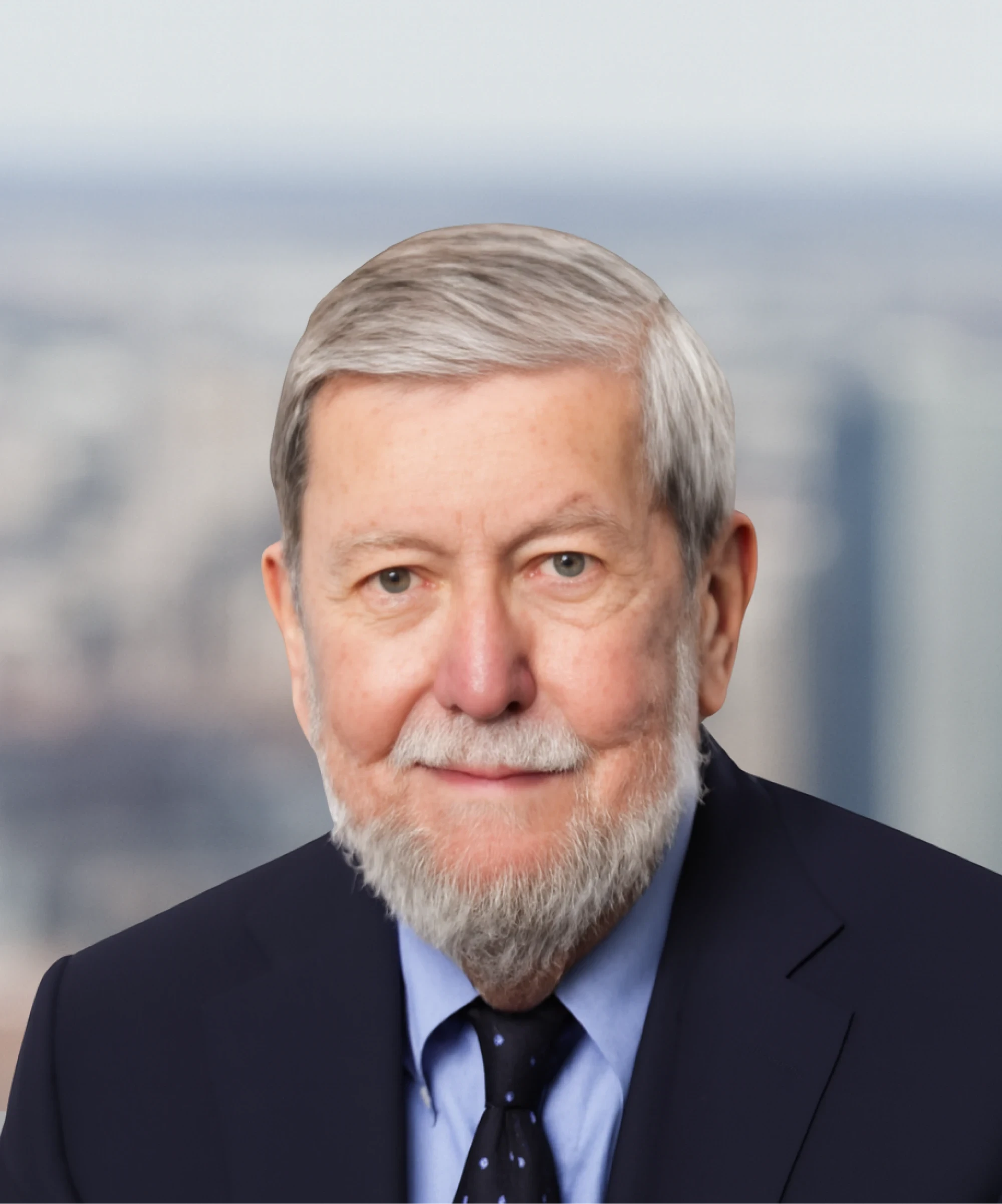
Written and reviewed by
Robert L. Parks
Of Counsel, trial lawyer. J.D., Georgetown University Law Center. Past Chairman, ABA Forum on Air & Space Law; more than 200 general aviation crash cases handled.
View full bio
More questions
Do I need a lawyer if the NTSB is investigating?
Yes. The NTSB investigates to determine the facts and probable cause of an accident (49 U.S.C. § 1131). It does not represent victims or compensate families, and federal law bars its reports from being used in a civil damages lawsuit (49 U.S.C. § 1154(b)). An independent investigation, started early, protects your claim.
Can a family sue in Florida for a crash that happened outside the United States?
Sometimes. Florida courts can hear claims against defendants that carry on business in Florida or commit a tortious act here (Fla. Stat. § 48.193(1)(a)). But if the country where the crash occurred bars the claim for lapse of time, Florida will not allow it (Fla. Stat. § 95.10). We evaluate every possible defendant and forum early, before any deadline runs.
What is the General Aviation Revitalization Act?
It is a federal law that limits claims against manufacturers of general aviation aircraft and parts. Most claims are barred if the accident occurred more than 18 years after the aircraft, or a replacement part, was delivered (Pub. L. 103-298, §§ 2, 3(3)). Exceptions include a manufacturer's knowing misrepresentation or concealment of required information from the FAA, and people who were not aboard the aircraft (Pub. L. 103-298, § 2(b)).
How much does it cost to talk to Garay Law?
The first consultation is free, and in aviation cases there is no fee unless we recover for you. Call (305) 445-4430, email info@garaylawfirm.com, or use the contact form, and we will go over what happened, the deadlines that may apply, and your options. If we take your case, we explain our fee agreement in writing before you sign anything.
Sources
Related practice areas
Wrongful Death
Products Liability
Boating Accidents
Resort Litigation